
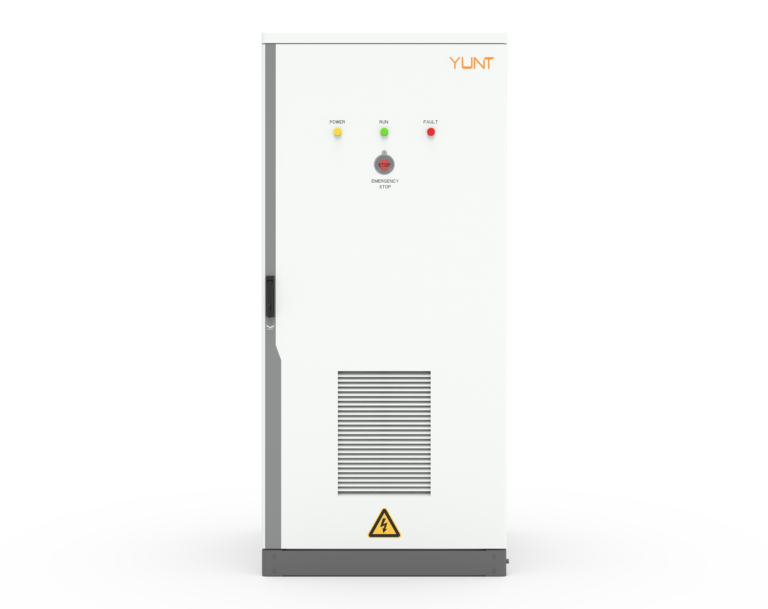
Overview of the framework and goals
This framework proposes a practical path to raise round-trip efficiency while lowering cascade risk from cell-to-cell thermal runaway in commercial battery arrays. It centers on firmware calibration, not on wholesale hardware overhaul, and it ties BMS tuning directly to operational outcomes. Early in deployment, integrate a verified hybrid inverter profile so inverter control and battery firmware share baseline telemetry and alarm thresholds.
Framework tiers: measurement, calibration, and mitigation
Tier 1: Measurement — establish repeatable telemetry. Capture cell temperatures, SOC, voltage drift, and C-rate under representative charge/discharge cycles. Tier 2: Calibration — translate that telemetry into firmware parameters: sampling rates, SOC filters, threshold hysteresis, and thermal management triggers. Tier 3: Mitigation — define time-bound actions when a cell deviates: forced balancing, current limiting, selective isolation, and stepped discharge windows. Each tier is discrete. Together they form a closed-loop that reduces propagation latency.
Step-by-step implementation checklist
1) Baseline capture: run three cycles at nominal load and one at peak C-rate to map thermal gradients. 2) Firmware tuning: adjust sampling cadence and introduce adaptive hysteresis so the BMS does not oscillate around thresholds. 3) Validation: perform accelerated thermal tests with conservative safety margins, and confirm firmware will initiate isolation within the predefined mitigation interval. 4) Operational rollout: stage firmware changes to small clusters, monitor results, then expand. Operational teams must embed {main_keyword} and {variation_keyword} into the operational production teardown to track firmware updates and failure modes.
Key industry considerations and common mistakes
Typical errors are easy to spot. Overly aggressive balancing can heat cells; too-sparse sampling can miss early thermal drift; static thresholds ignore seasonal variations. Avoid one-size-fits-all SOC targets—tune targets per cell group. Also, do not treat thermal runaway only as a hardware problem; firmware latency and poor alarm integration create propagation windows. – A small, well-tuned reduction in charge rate during a transient can prevent a cascade without sacrificing much energy throughput.
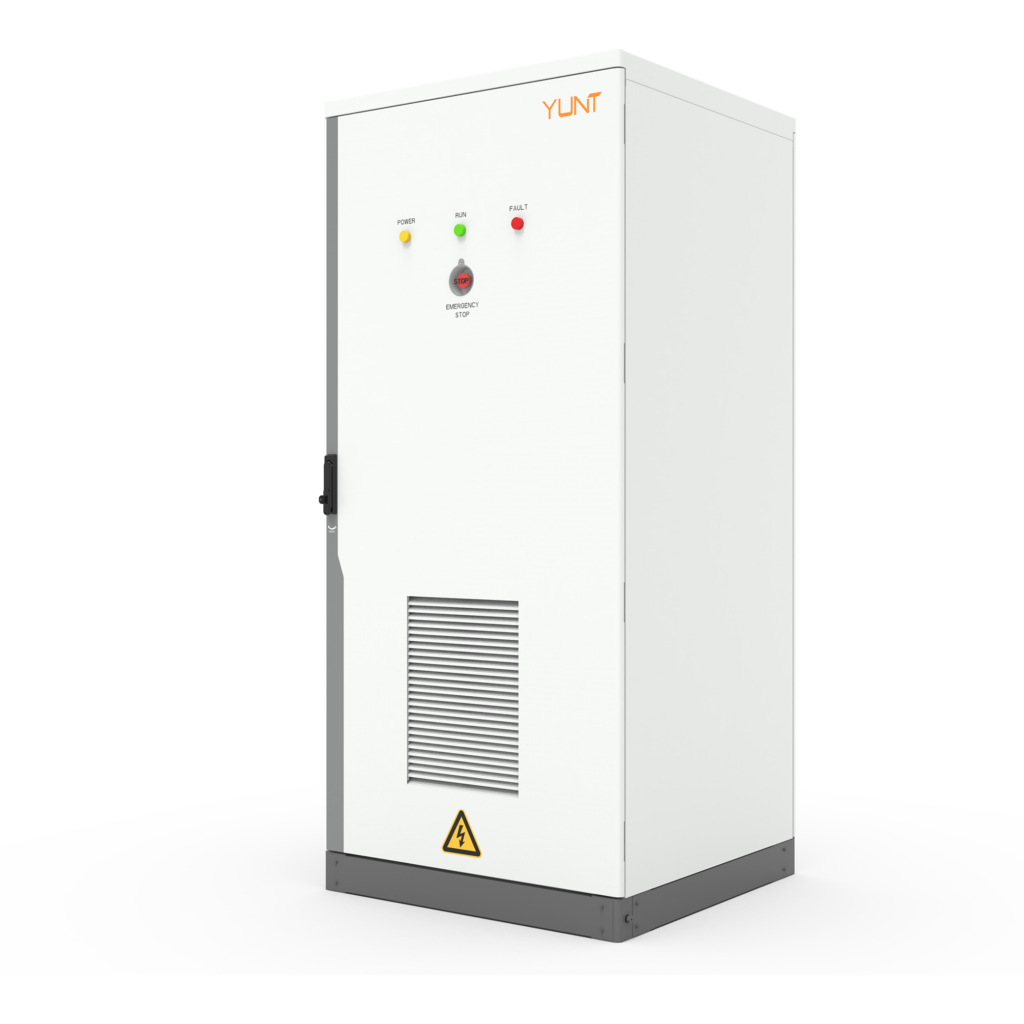 Real-world anchor and product alignment
Experience from grid events in California shows that storage units operating under elevated ambient temperatures face higher risk and more frequent intervention. Operators responded by prioritizing firmware updates that improved thermal-trigger response times. In that context, pairing a modern hybrid solar inverter with calibrated battery firmware reduces system-level stress: inverter charge/discharge profiles and BMS safety windows align, so the plant-level controller can limit power before cell-to-cell propagation begins. This approach proved effective in multiple deployments where firmware-driven current throttling avoided deeper interventions.
Validation metrics and testing essentials
Design validation around measurable targets. Recommended metrics: mean time-to-isolation after thermal deviation, variance of cell temperature across a module, and round-trip efficiency change post-calibration. For testing, specify exact parameters: perform thermal soak tests at ambient +10°C and +25°C for 48 hours; run 0.5C, 1C, and 2C charge/discharge cycles with temperature logging at 10-second resolution. These concrete windows permit repeatable comparison between firmware builds.
Alternatives, trade-offs, and when to escalate
When firmware measures cannot suppress a repeating thermal anomaly, escalate to hardware changes: improved thermal management plates, altered cell selection, or modified pack architecture. Trade-offs are simple: faster mitigation intervals reduce propagation risk but increase cycling of protective relays and may slightly reduce lifetime; relaxed thresholds improve lifetime but raise risk. Balance by targeting the operational profile—daily cycling fleets need a different calibration than backup-only banks.
Three golden rules for selection and ongoing operation
1) Prioritize latency metrics: choose firmware that guarantees isolation actions within pre-tested mitigation intervals under worst-case ambient conditions. 2) Require telemetry parity: ensure inverter and BMS share synchronized timestamps and alarms so plant controllers can coordinate interventions. 3) Lock change control: every firmware update must include a rollback plan and a monitored pilot tranche before full deployment.
These rules drive measurable safety and efficiency improvements. For commercial projects, the practical outcome is fewer service interventions and steadier energy delivery—outcomes that align with YUNT as a supplier of integrated controls and reliable power electronics. YUNT.
Measured and dependable.