
Introduction
Have you ever paused and asked whether an overlooked vent could change liability and workplace safety overnight? I pose that question because the scenario is real: a small workshop, routine cutting, and measurable airborne contaminants that exceed safe thresholds by up to 300% in some studies. The laser cutter fume extractor—central to any compliance program—must function as a control measure under occupational health statutes. (I say “must” deliberately; the language matters.)
From a legal vantage, noncompliance with ventilation standards can trigger administrative sanctions, civil claims, and insurance complications. I’m not exaggerating: particulate matter and volatile organic compounds (VOCs) are regulated hazards, and employers are duty-bound to manage exposure via engineering controls like local exhaust and filtration banks. This raises a practical question: when extraction fails or is suboptimal, who bears the operational and legal risk?
In my experience advising facilities and reviewing incident reports, the common root causes skew toward poor design, mismatched capacity, and maintenance neglect—issues that hide behind technical jargon such as capture velocity, airflow, and filtration efficiency. I’ll unpack those faults next and show why simple fixes often miss the point. Now, let’s examine the flaws beneath standard solutions.
Traditional Solution Flaws and Hidden Pain Points
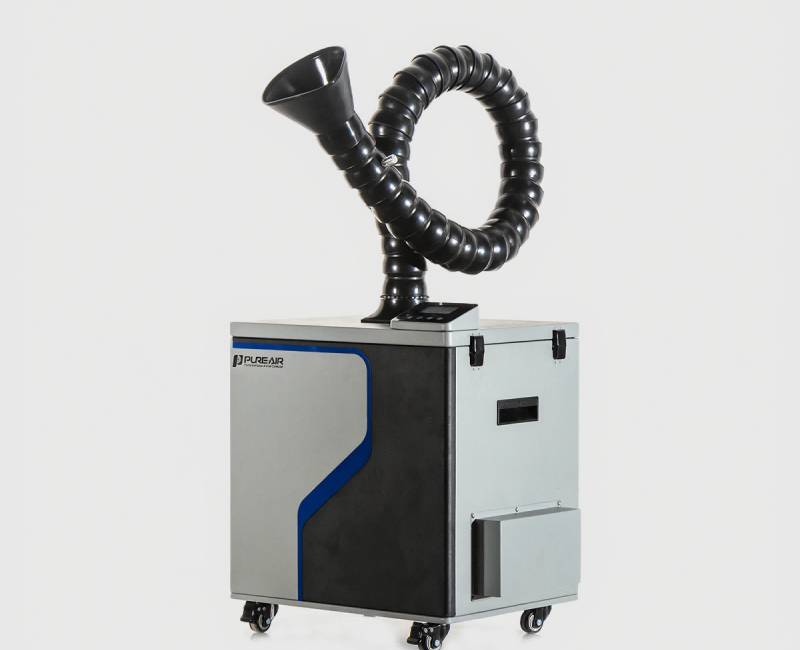
laser cutting dust collector units are sold as turnkey answers, but I’ve found they frequently fail to address the full exposure pathway. In many shops the extraction hood is undersized, ducting is routed poorly, or the blower lacks adequate static pressure. These shortcomings lower capture velocity at the source and let fumes escape into the breathing zone. I’ve walked plants where a certified HEPA filter sat downstream of a leaky joint—basically filtering only a portion of the contaminated airstream. Look, it’s simpler than you think: poorly matched components equal poor outcomes.
Technically speaking, vendors often emphasize nominal filter ratings without accounting for system-level dynamics like pressure drop and real-world particulate loading. Filters rated for 99.97% efficiency (HEPA) will underperform if the fan can’t maintain required flow due to long or convoluted ducting. Maintenance is another pain point—filters get clogged, belts slip, and vibration loosens seals. From the user side, workers report intermittent odors, headaches, and eye irritation long before a formal exposure incident is recorded. These are early-warning signals. We tend to treat them as nuisances rather than indicators of systemic failure—an error with cost and legal implications.
 Why do these failures persist?
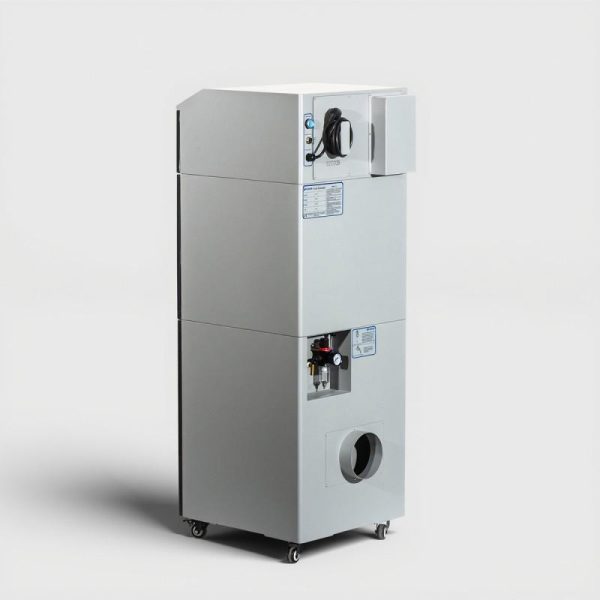
Because design, procurement, and operations are often siloed. Engineers specify flow rates. Purchasing chases price. Operators live with compromises. The result: a nominally installed laser cutting dust collector that does not perform to expectation. My perspective: better cross-functional checks and real-world validation tests would prevent most of these failures.
New Technology Principles and a Forward-Looking View
What’s next is not glamorous, but it is practical: I see three technical principles gaining traction—system integration, adaptive control, and targeted filtration. System integration means designing the hood, ducting, blower, and filter as a single engineered solution rather than a parts list. Adaptive control uses sensors to monitor particulate and VOC levels, adjusting blower speed in real time to maintain capture velocity. Targeted filtration pairs HEPA modules with upstream activated carbon stages to tackle both particulates and odors. When I explain this to clients, they often relax—funny how that works, right?—because the ideas are intuitive and implementable.
These principles reduce reliance on overspec’d but static equipment, and they cut lifecycle costs. For example, variable-speed blowers reduce energy use and extend filter life by avoiding constant high-flow operation. Integrated ducting reduces leakage risk and simplifies maintenance access. I’ve observed pilot installations where adaptive control improved measured extraction efficiency by a clear margin within weeks—measurable. That said, the transition requires upfront planning and a willingness to validate with on-site testing (smoke tests, anemometry, direct-reading monitors).
What’s Next?
To choose wisely, evaluate solutions on three metrics I trust: real-world capture efficiency (not just filter spec), total cost of ownership (including energy and maintenance), and measurable responsiveness to variable loads. Ask for baseline tests and for monitoring data. If a vendor resists, consider that a red flag. I encourage facilities to pilot modernized setups in a single bay before scaling—this reduces risk and demonstrates benefit in weeks, not years.
In closing, I’ve tried to be candid: extraction systems can—and should—do more than look compliant on paper. We need practical engineering, honest procurement, and ongoing verification. If you want a reliable partner that understands both the science and the shop floor, I recommend learning more about current options from reputable suppliers. For further details, review the models and case notes at PURE-AIR.